
Alhambra Night Tour Attendance Revenue: How Limited Access Creates Millions in Value
What Is the Alhambra Night Tour?
The Alhambra Palace in Granada, Spain is one of Europe’s most visited historical landmarks. During the day, it welcomes thousands of visitors into its gardens, palaces, and courtyards. But as sunset arrives, a quieter and more exclusive version of the experience begins for a carefully selected group of evening visitors.
The night tour was designed to offer something distinct from the daytime visit. Instead of large crowds and full sunlight, visitors experience the Alhambra through soft, atmospheric lighting that brings out the detail of Islamic architecture in a way that daylight simply cannot match. The silence, the cool air, and the reduced capacity all contribute to a feeling of genuine exclusivity.
This is not just a marketing strategy. It is a deliberate model built around conservation, visitor quality, and long-term financial sustainability. Understanding how it works reveals why it has become a model that cultural sites around the world are beginning to study and replicate.
VISITORS
VISITS
VISITORS
Alhambra Night Tour Attendance: How Many People Visit?
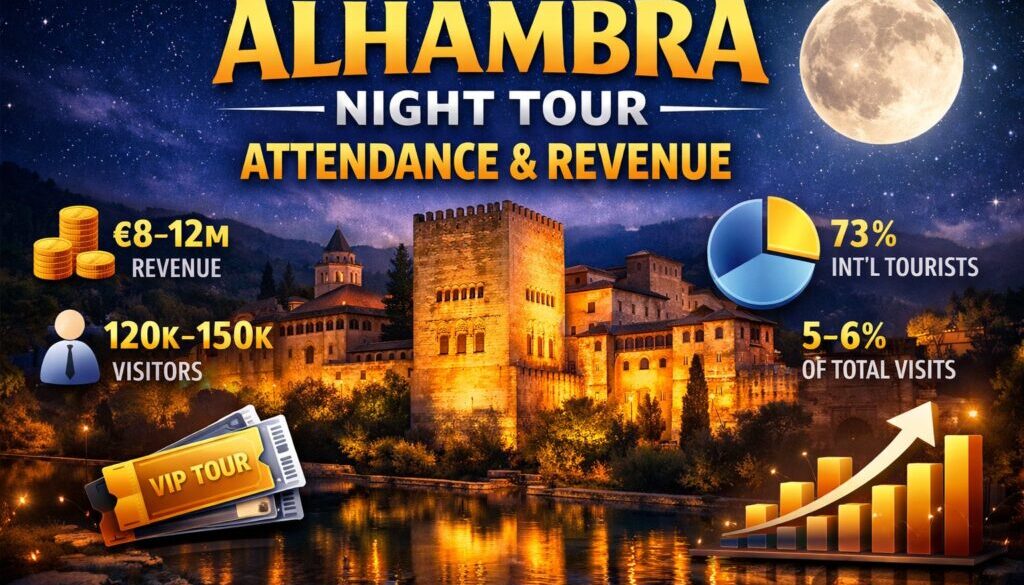
Night tours at the Alhambra attract roughly 120,000 to 150,000 visitors per year. At first glance, that may sound modest for one of Spain’s most famous landmarks. But this number is intentional. The Patronato de la Alhambra y Generalife, which manages the complex, sets strict nightly capacity limits to protect the fragile structure and preserve visitor quality.
During peak season, which runs from April through October, nightly attendance can reach 400 to 500 visitors per session. In the quieter winter months, that figure drops to roughly 200 to 300 visitors per night. Despite this fluctuation, demand consistently outpaces available slots. Tickets for popular nights, especially summer weekends, tend to sell out days or even weeks in advance.
This controlled approach is one of the key reasons the night tour model works so well. By keeping attendance low and demand high, the Alhambra preserves the sense of exclusivity that makes the experience worth a premium price.
Night tours represent only about 5 to 6 percent of total annual Alhambra visits, yet they generate a disproportionately high share of revenue per visitor compared to standard daytime entry.
How Much Revenue Do Night Tours Generate?
Annual revenue from Alhambra night tours is estimated between €8 million and €12 million, depending on seasonal performance, pricing adjustments, and the volume of premium guided bookings. This income comes from multiple sources, not just standard ticket sales.
- Standard evening entry tickets to the Nasrid Palaces or Generalife Gardens
- Guided night tour packages priced above standard admission
- Special event nights such as full moon tours, which carry higher prices
- Group bookings from travel agencies and cultural tour operators
Seasonal variation plays a significant role in how revenue accumulates across the year. July is historically the strongest single month, with estimates suggesting revenue close to €900,000 during that peak period. January, on the other hand, produces significantly lower figures, often around €385,000, reflecting the quieter winter travel season.
What makes this revenue model efficient is its focus on value rather than volume. The Alhambra does not need to fill every corner of its grounds to generate strong returns. Higher ticket prices, combined with lower operating costs at night, create healthy margins even with a fraction of the daytime visitor count.
Seasonal Performance Overview
Tourism at the Alhambra follows predictable seasonal rhythms, but the night tour business is shaped by a few additional factors, including evening temperatures, international travel patterns, and local holiday calendars.
| SEASON | MONTHS | AVG. NIGHTLY VISITORS | REVENUE TREND |
|---|---|---|---|
| Peak | June, July, August | 400 – 500 | Highest (tickets sell out) |
| High Shoulder | April, May, September, October | 300 – 400 | Strong, consistent |
| Low Shoulder | March, November | 200 – 300 | Moderate |
| Off-Peak | December, January, February | 150 – 250 | Lower but steady |
Even during low season, demand remains steady because night tours attract a particular kind of traveler: those who specifically seek cultural depth over convenience. These visitors plan their trips with purpose and are less likely to cancel, making the revenue stream more predictable year-round.
Ticket Pricing and the Premium Experience Model
Night tour tickets at the Alhambra are consistently priced higher than daytime entry. A standard daytime ticket generally costs around €14, while evening access to the Nasrid Palaces can cost €16 or more. That gap widens further for guided tours, special themed nights, and weekend sessions when demand peaks.
This 20 to 30 percent pricing premium reflects the curated nature of the experience. Visitors are not simply paying for access to the same space at a different hour. They are paying for a completely different atmosphere, a controlled group size, and an emotional experience shaped by lighting and silence that daytime visits cannot replicate.
The site also uses a form of dynamic pricing, adjusting ticket costs based on season, day of the week, and event type. Full moon nights, for example, carry higher prices that reflect their popularity and limited availability. This approach allows the Alhambra to capture more revenue during high-demand periods without simply increasing overall attendance.
Research has shown that a 15 percent increase in ticket prices can cause a 22 percent drop in attendance during sensitive periods, which is why pricing decisions are made carefully and gradually.
Who Attends Alhambra Night Tours?
The demographic profile of night tour visitors is meaningfully different from daytime guests. Around 73 percent of night tour attendees are international tourists, compared to roughly 64 percent for daytime visits. This shift matters because international visitors behave differently as consumers.
They tend to book further in advance, are less likely to cancel last-minute, and are more willing to pay higher prices for experiences they consider unique or once-in-a-lifetime. For a site managing its finances carefully, this makes the night tour audience particularly valuable from a revenue planning perspective.
- European tourists, especially from France, Germany, and the UK, make up a large share
- North American visitors are a growing segment, often booking as part of broader Spain itineraries
- Couples and anniversary travelers choose night tours at a higher rate than families
- Cultural travelers and architecture enthusiasts consistently seek out the evening experience
Why Preservation Shapes the Revenue Model
The Alhambra is a UNESCO World Heritage Site, and its management is governed by conservation obligations that go far beyond typical tourism operations. The physical structure, particularly the Nasrid Palaces with their intricate plasterwork and tile surfaces, is genuinely vulnerable to the cumulative effects of foot traffic, humidity, and vibration caused by large crowds.
Because of this, attendance limits are not simply a marketing device to create artificial scarcity. They are a practical and legal necessity. The capacity restrictions applied to night tours are among the strictest at any major heritage site in Europe, and they have a direct influence on how revenue is earned and managed.
All revenue generated by the Alhambra, including from night tours, is reinvested back into the complex. Conservation work, lighting infrastructure, staff training, and restoration projects all draw from ticket income. This means that every night tour visitor is directly contributing to the survival of the site they came to experience.
Operational Costs Behind the Night Experience
Running night tours at a historic monument is not simply a matter of keeping the gates open after dark. The Alhambra requires significant investment in lighting infrastructure, security, staffing, and technical support for each evening session. These costs are real, but they are also manageable given the premium pricing that night tours command.
Lighting alone is estimated to cost around €180,000 per year. Each night tour session requires approximately 25 to 30 staff members, including security personnel, tour guides, ticketing staff, and site managers. These expenses are factored into the pricing model and ultimately absorbed by the higher per-visitor ticket revenue that night sessions generate.
When you compare the cost structure of night tours to daytime operations, the margins are actually favorable. Fewer visitors mean lower wear and tear on the site, reduced cleaning needs, and more predictable staffing requirements. The result is an operation that is financially efficient by design.
The Broader Economic Impact on Granada
The financial story of Alhambra night tours does not end at the ticket booth. Evening visitors who arrive in Granada specifically for a night tour often extend their stay, dine at local restaurants, stay in nearby hotels, and shop in the city center. This ripple effect significantly amplifies the economic value of each night tour booking.
Granada’s tourism economy is deeply connected to the Alhambra’s performance. When night tours are fully booked through the summer, the wider hospitality sector benefits. Hotels fill their rooms, tapas bars see increased evening traffic, and local tour operators book guided walking experiences around the night tours as part of larger packages.
This broader economic contribution is sometimes overlooked when analyzing night tour revenue in isolation. The true financial value to Granada as a city is considerably higher than the €8 to €12 million in direct ticket income, once all secondary spending is included in the calculation.
What the Future Looks Like for Night Tour Revenue
The global trend toward experience-driven travel is accelerating, and cultural night tourism sits squarely at the center of that shift. Travelers are increasingly choosing depth over volume, meaning they prefer fewer but more meaningful stops on their journeys. This behavioral change works strongly in the Alhambra’s favor.
Revenue growth at the Alhambra is unlikely to come from simply adding more visitors. The conservation limits that govern the site make capacity expansion impractical. Instead, future revenue growth is expected to come from smarter pricing strategies, the introduction of new premium packages, and enhanced digital booking experiences that capture more international demand earlier in the planning cycle.
Technology will also play a growing role. Advanced booking platforms, multilingual audio guides, and virtual pre-visit experiences have the potential to increase perceived value and support higher ticket pricing over time. As long as the physical experience remains rare and tightly controlled, the revenue model will stay strong.
Frequently Asked Questions (FAQs)
How many people visit the Alhambra on a night tour each year?
Approximately 120,000 to 150,000 visitors attend night tours annually. This represents around 5 to 6 percent of the Alhambra’s total yearly attendance, which approaches 2.7 million visitors overall.
How much does a night tour ticket cost at the Alhambra?
Standard night tour tickets typically cost around €16 or more for access to the Nasrid Palaces. Guided tours and special events such as full moon nights are priced higher, reflecting their popularity and limited availability.
How much revenue do Alhambra night tours generate?
Annual night tour revenue is estimated between €8 million and €12 million. This varies based on seasonal demand, pricing adjustments, and the proportion of premium guided bookings within the total visitor mix.
When is the best time to book an Alhambra night tour?
Booking several weeks in advance is advisable, especially for summer months. July and August see the highest demand, and tickets for weekend sessions frequently sell out before the date arrives.
Why are night tour tickets more expensive than daytime tickets?
Night tours offer a completely different experience, with atmospheric lighting, smaller crowds, and a more intimate atmosphere. The premium reflects the exclusivity of limited access, higher operational costs, and the overall quality of the experience.
Final Thoughts
The Alhambra night tour is not just a tourist attraction. It is a carefully engineered system that proves exclusivity, quality, and careful pricing can generate serious revenue without compromising the integrity of a heritage site.
For anyone studying sustainable tourism, cultural site management, or premium experience design, the Alhambra night tour model is one of the clearest examples of getting the balance exactly right. The palace earns well precisely because it does not chase mass numbers.