
Costco Rival Launches Megastore and the Bulk Retail War Has Officially Begun
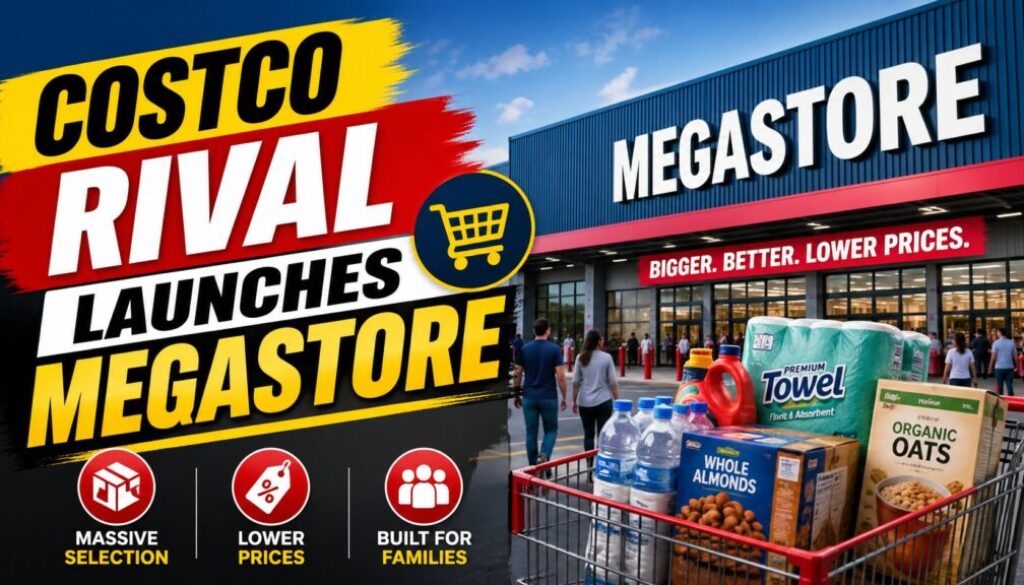
The retail world is changing fast. A major Costco rival has launched a megastore, and shoppers across the country are paying close attention. This bold move is reshaping the way Americans think about bulk shopping, membership clubs, and everyday savings.
For years, Costco has stood at the top of the warehouse retail game. But now, serious competitors are stepping up with larger stores, better pricing, and fresh ideas. The question on everyone’s mind is simple: will this new megastore give Costco a real challenge?
Why Costco Rivals Are Going Big in 2026
Rising grocery prices have pushed millions of American families toward bulk shopping. Food inflation has been a real problem, with families spending hundreds of dollars more on groceries in 2025 compared to the year before. When money is tight, people look for smarter ways to shop.
This is exactly why competitors are launching megastores right now. The timing makes sense. Shoppers want value, variety, and convenience all in one place. A megastore delivers just that, and it gives brands a real chance to pull customers away from Costco.
Who Are the Real Costco Rivals?
Several major players have been making headlines in 2026. Each one is approaching the competition differently, but all of them share the same goal: offer a better or at least an equally compelling shopping experience.
Here are the key names leading the charge:
- BJ’s Wholesale Club is expanding aggressively into Texas, with new warehouses opening in the Dallas-Fort Worth area in spring 2026. It offers memberships starting at $60 per year and promises members up to 25% savings on grocery prices.
- Sam’s Club, owned by Walmart, continues to grow with large format stores that combine bulk groceries, electronics, fresh produce, and home goods under one roof.
- ALDI is planning to open more than 180 new stores by the end of 2026, with a long-term goal of reaching over 3,200 locations by 2028. More than 90% of its products are private label, which helps keep prices low.
- Resco Food Service near Los Angeles and Mega Mart, a Korean grocery warehouse chain, are opening large specialty megastores in California, targeting diverse shoppers who want international and specialty products alongside everyday bulk items.
What Makes These Megastores Different
A megastore is not just a bigger version of a regular warehouse club. It is a completely different shopping experience built for today’s consumer. These stores often stretch beyond 150,000 square feet and combine the efficiency of a warehouse with the feel of a modern retail destination.
Walking into one of these stores, shoppers find wide aisles, organized sections, and technology built into the experience. Self-checkout kiosks, mobile app support for price checks, and in-store cafes make the visit feel more enjoyable and less rushed.
The biggest shift is in product variety. Traditional warehouse clubs like Costco keep a tight, curated inventory. New megastores go wider, offering bulk staples alongside specialty foods, seasonal items, and even niche international products. This appeals to a broader group of shoppers who want more than just a pallet of paper towels.
Pricing and Membership: A New Approach
Costco built its empire on the annual membership model. You pay upfront, and in return you get access to deeply discounted bulk products. It works brilliantly and has kept Costco members loyal for decades.
But newer megastores are experimenting with this formula. Some are offering flexible membership tiers that lower the entry barrier for first-time shoppers. Others are removing mandatory membership altogether, positioning themselves as open-access stores that still offer competitive pricing.
This is a smart move. Many consumers have hesitated to join warehouse clubs because of the upfront cost. By reducing or removing that barrier, rivals can bring in a new wave of shoppers who would otherwise avoid bulk retail entirely.
How Technology Is Changing the Megastore Experience
Modern megastores are not just big buildings filled with pallets of goods. They are becoming tech-forward retail spaces that use data and digital tools to improve the customer journey. Smart carts, real-time inventory apps, and personalized promotions are now part of the standard megastore toolkit.
Supply chain technology is also getting a major upgrade. These new stores invest in automated warehousing, predictive stock management, and advanced logistics systems. The goal is to make sure shelves are always stocked and customers are never disappointed.
For shoppers, this means a more reliable experience. Nothing is more frustrating than driving to a bulk store only to find the item you needed is out of stock. Better supply chain systems solve this problem, which builds long-term customer trust.
What This Means for Costco
Costco is not sitting still. The company still enjoys strong membership renewal rates and a deeply loyal customer base. Its Kirkland Signature private label continues to be one of the most trusted store brands in the country.
However, competition at this level forces even the strongest players to rethink their strategy. Costco may respond by exploring more flexible membership options, adding more regional and culturally relevant products, or investing more heavily in its digital experience.
The truth is that competition benefits everyone, especially shoppers. When giants fight for your loyalty, you end up with better prices, more choices, and improved shopping experiences across the board.
Impact on Local and Small Businesses
When a megastore opens in a region, the impact is felt well beyond the big-box retail sector. Local grocery stores and smaller specialty shops may see a shift in foot traffic, especially in the first few months after a new megastore launch.
That said, smaller stores have their own advantages. They offer personalized service, unique local products, and a community connection that a 150,000-square-foot warehouse simply cannot replicate. Many small retailers respond to megastore competition by doubling down on what makes them special.
The retail landscape works best when there is room for both. Megastores serve the bulk buyer and the deal hunter. Small businesses serve the loyal neighborhood shopper. Both can thrive if they understand their strengths.
Frequently Asked Questions (FAQs)
Which company is the biggest Costco rival right now?
Several companies compete seriously with Costco, including Sam’s Club, BJ’s Wholesale Club, and ALDI. Each has its own strengths, but all are investing heavily in expansion and improved store formats in 2026.
Do these new megastores require a membership?
It depends on the retailer. Some megastores keep a membership model with tiered pricing. Others are moving toward open-access shopping with no upfront membership fee required.
How big are these new megastores?
Many new megastores span over 150,000 square feet. Some exceed 180,000 square feet, combining bulk retail, fresh food sections, in-store services, and food courts in a single location.
Why are Costco rivals launching megastores in 2026?
Rising food prices and inflation have pushed more shoppers toward bulk and discount retail. Rivals see this as the right moment to expand and capture consumers who are actively looking for better deals.
How does ALDI compete with Costco?
ALDI focuses on extremely low prices through a private-label model. Over 90% of its products are store-branded, which cuts costs. Its expansion plan of 180-plus new stores in 2026 brings it closer to more American households.
Will Costco lower its prices because of this competition?
Costco has not announced price reductions, but competition generally pushes all retailers to improve value. Costco may respond with more flexible memberships, better product variety, or enhanced digital features rather than a direct price cut.
Final Thoughts
The launch of megastores by Costco rivals is one of the most exciting retail stories of 2026. Whether it is BJ’s opening warehouses in Texas, ALDI expanding at a rapid pace, or new specialty megastores targeting diverse communities, the message is clear. The bulk retail industry is growing, evolving, and getting more competitive than ever.
For shoppers, this is great news. More competition means better deals, more variety, and a stronger push from all retailers to earn your loyalty. The megastore era is here, and it is changing the way we shop for good.